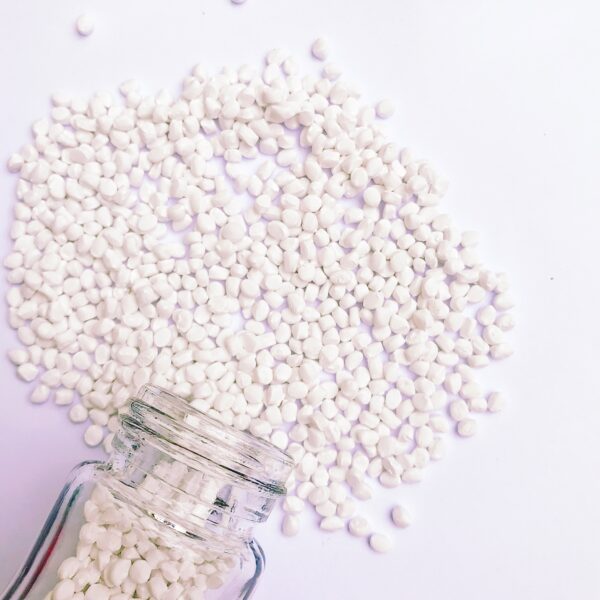
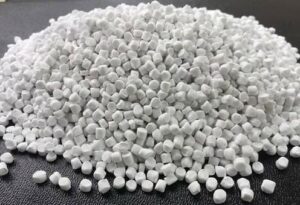
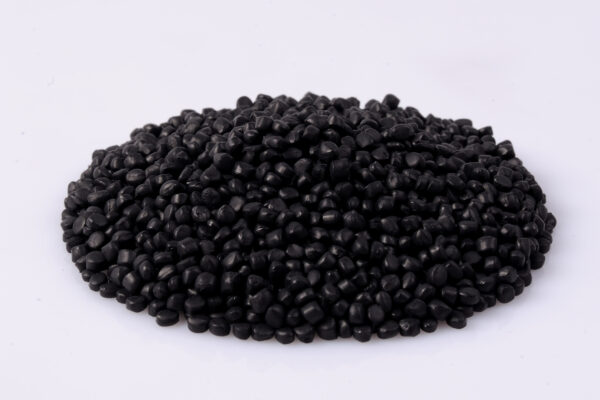
Calcium carbonate filler masterbatch is the most effective cost-saving solution for worldwide plastic processors.
CaCO3 filler masterbatch not only cuts down plastic production costs by replacing a part of virgin polymer during extrusion, injection and blow molding, but also increases output, improves production conditions as well as a number of physical and chemical properties of finished plastic products.
With a variaty of choices in the market CaCO3 filler masterbatches may remarkably differ in quality due to different formulations (CaCO3 content, carrier polymers type & content, chemical additives), compounding technologies.
Usually it accounts for 70-85% of the final product CaCO3 Filler Masterbatch at US MASTERBATCH JSC.
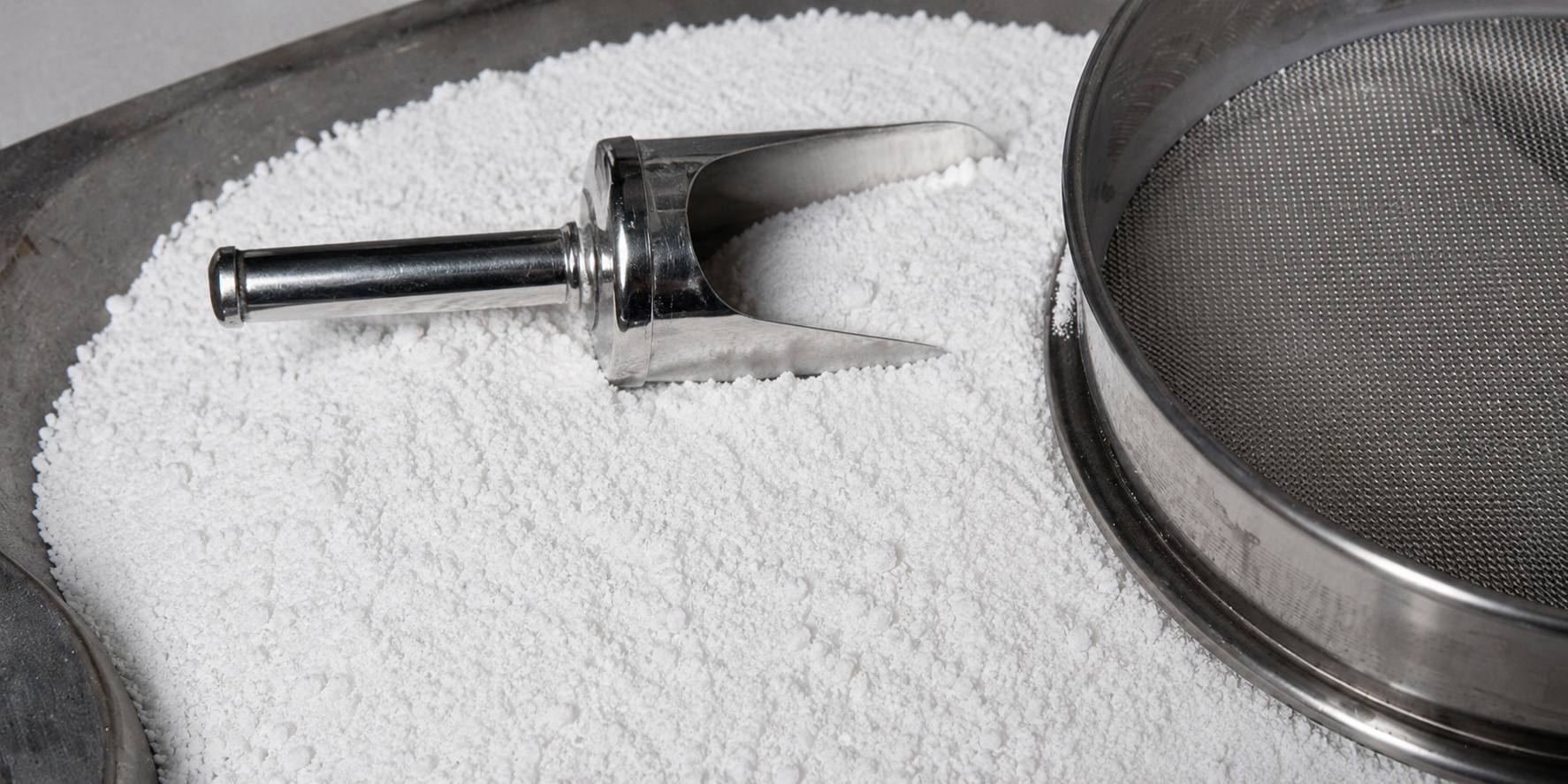
CaCO3, also called carbonic acid or calcium salt is an odorless, tasteless powder or crystal that occurs in nature, which is widely used in many industries. US MASTERBATCH uses pure and high-quality CaCO3 powder. Our powder is quarrying at Nghe An and Yen Bai, two of the biggest stone quarry in Viet Nam.
One of the most important ingredients that make up the CaCO3 Filler Masterbatch is CaCO3 Powder.
CaCO3 is accounted for more than 4% the Earth’s crust. It is found in the shape of chalk, limestone, marble…
Despite of the same in chemical composition, they difference from each other in the purity, the density, and the whiteness. Therefore, US MASTERBATCH only choose the purest stone quarries which meet our high standard to exploit.
Pure powder CaCO3 is the purest CaCO3 powder which did coated by fatty acid.
Pure calcium carbonate is in solid form (usually in the form of fine powder), odorless and have white color with melting temperature ranging from 800 to 1400oC. Their molecular weight is 100,087 g/mol.
The reason that manufacturers can widely use calcium carbonate filler in plastic production is because chemical properties of it (CaCO3) and the plastic in the association with are not changed when mixed together with many plastic types and other additives. In addition, calcium carbonate is also insoluble in water, stable under normal temperature conditions and only reacts with some strong acids (such as HCl), medium (as sulfamic) or weak acids (acetic, citric, phosphoric, lactic, sorbic). Thanks to these properties, plastic products generated from calcium carbonate masterbatch will be applied in a wide range of fields, including those required the assurance on user’s safety such as the food and beverage industry.
Vietnam calcium carbonates are a nationally significant source of raw materials. Commercial calcium carbonate grades, in the form of powders, granules and slurries, are produced in 2 ways: through the extraction and processing of natural ores or synthetically through chemical precipitation.
Ground calcium carbonate, commonly referred to as GCC, is primarily based on chalk,limestone and marble in Vietnam.
Precipitated Calcium Carbonate (PCC) is produced through a recarbonisation process or as a by-product of some bulk chemical processes.
GCC Production
Though there are extensive reserves of chalk, limestone and marble in Vietnam, in reality only a few deposits are of sufficiently high quality to be able to provide raw materials for industrial and agricultural uses. Only if the purity, colour, thickness and homogeneity are acceptable is commercial extraction worthwhile.
PCC Production
Most commercial producers use the recarbonisation method of PCC production where limestone is converted into calcium oxide (lime) and carbon dioxide by calcination at high temperatures. After calcination the lime is slaked with water and the resulting milk of lime is purified and re-carbonised with the carbon dioxide obtained directly from the calcination process.
we use Natural Superfine Calcium Carbonate uncoated with stearic acid. Manufactured from white and pure crystalline limestone/calcium carbonate; produced by the most advanced technological GCC plants of Hosokawa Alpine, Germany to assure our best quality of CaCO3 Filler Masterbatch
CaCO3 Specification | Particle size: (Mastersizer 2000E, Malvern, UK) |
| ||
* Top cut (D97) | 8 ± 1 µm |
| ||
* Medium size: D50 | 1.90 µm | Max | ||
Specific surface area: | 12.00 m2/g | Min | ||
Fineness: (Check the particle size distribution from Mastersizer 2000E) |
| |||
* Passing through 325 mesh seive: | 100% | Max | ||
* Retaining on 325 mesh seive: | 0,00% | Max | ||
Brighness: | 96.00% | Min | ||
Whiteness: | 97.00% | Min | ||
Moisture (Ex-work): | 0.20% | Max | ||
Bulk density of raw materials: | 2.70g/cm3 |
| ||
Oil absorption: | 23g/100g | Min | ||
pH value: | 8-10 |
| ||
|
| |||
CHEMICAL COMPOSITION | CaCO3 content: | 98.98% | Min | |
MgCO3 content: | 0.21% | Max | ||
Fe2O3 content: | 0.02% | Max | ||
Al2O3 content: | 0.03% | Max | ||
SiO2 content: | 0.12% | Max | ||
The chemical composition of CaCO3 Powder
**************************************
Together We Develop
📧 info@maskaglobal.com
📞 +84 3828 59 268
🌐https://maskaglobal.com/
#fillermasterbatch #colormasterbatch #MASKAGLOBAL #Vietnam #plastic